Discover What “Enrichment” Really Means
Learn why simple activities can transform your dog’s daily life—boosting happiness, confidence, and well-being through science-based enrichment.
Learn why simple activities can transform your dog’s daily life—boosting happiness, confidence, and well-being through science-based enrichment.
Canine enrichment is more than just keeping your dog busy. It’s about creating experiences that engage their mind in meaningful ways. These experiences also engage their body and emotions. True enrichment is individualized, recognizing that every dog has unique needs, preferences, and learning styles.
While enrichment often includes instinctual activities like sniffing, chewing, and problem-solving, it’s not just about tapping into natural drives. It’s also about teaching calmness, focus, and emotional regulation. By providing the right balance of engaging activities and structured downtime, enrichment helps dogs build confidence. It also reduces stress and helps them develop better self-control.
Enrichment includes puzzle games, sensory experiences, and relaxation training. It supports mental, emotional, and physical well-being. This helps dogs thrive in our world, not just exist in it.
Enrichment is all about giving dogs the best possible quality of life. This is achieved by meeting their natural needs in a safe and realistic way. It should fit their environment.
We often think the toy or puzzle we put down is enrichment. The truth is, they are just toys and tools to use. Enrichment is the end result, the desired outcome.
It’s about creating opportunities for them to thrive right here, right now, in their real world.
It’s about understanding who they are as individuals and providing meaningful, practical ways to bring out their best selves.
Canine Brain Games Philosophy
At Canine Brain Games, we focus on helping dogs adapt to a human-centric world. We achieve this through education and engaging games. We follow our Think,
Engage the Mind: We understand that dogs are intelligent with a natural curiosity to explore and learn. Through interactive toys, puzzles, and games, we aim to stimulate their minds, encouraging problem-solving skills and mental agility.
Energize the Body: Physical activity is essential for maintaining a healthy lifestyle for dogs of all ages and breeds. Our play philosophy emphasizes the importance of regular exercise. Activities like fetch, agility courses, and outdoor adventures keep dogs active and fit.
Strengthen Bonds: Playtime isn’t just about fun; it’s also an opportunity for dogs to bond with their human companions. Dogs and their owners can engage in tug-of-war or go on sniff walks. Simply cuddling on the couch also strengthens this bond. We believe that play cultivates trust and companionship.
The concept of environmental enrichment emerged in the early 20th century, with Robert Mearns Yerkes, a pioneering psychobiologist, being one of the first to recognize its importance. In the 1920s, Yerkes observed that the well-being of captive primates improved when they were provided with interactive apparatuses, leading to enhanced psychological and physiological health.

Building upon Yerkes’ foundational work, the field of environmental enrichment has evolved significantly, emphasizing the need to create stimulating environments that cater to the natural behaviors and instincts of animals in captivity. This approach not only addresses their physical needs but also promotes mental well-being, leading to more balanced and healthy animals.
In the context of canine enrichment, this means designing activities and environments that not only engage a dog’s instinctual behaviors—such as sniffing, chasing, and chewing—but also promote calmness and emotional regulation. By tailoring enrichment to the individual dog’s needs, we can enhance their overall well-being and strengthen the human-animal bond.
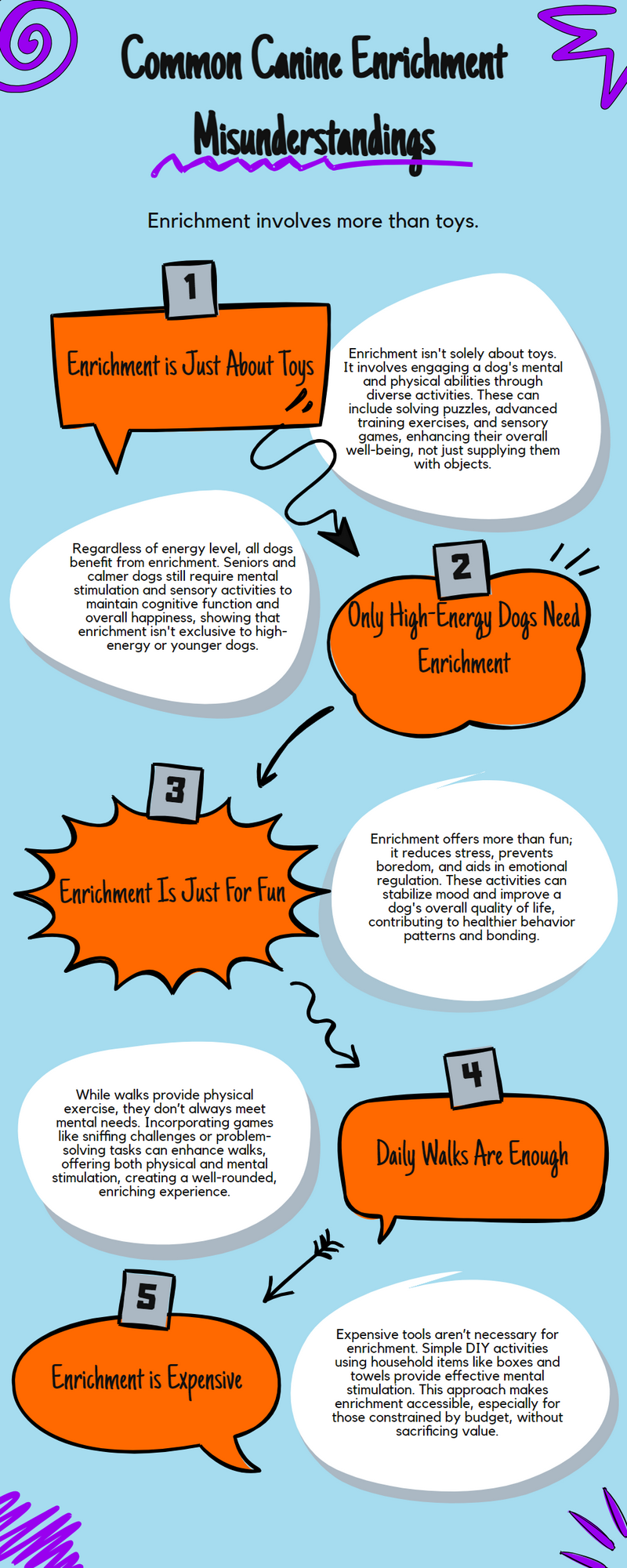
Enrichment is Only for Puppies or Young Dogs
It’s Just About Keeping Dogs Busy
Dogs Don’t Need Enrichment if They’re Well-Trained
Enrichment Needs to Be Complicated
One-Size-Fits-All Approach
Enrichment Overstimulates Dogs
Enrichment Takes Too Much Time
Food-Based Enrichment Will Make My Dog Overweight
Reactive or Anxious Dogs Can’t Benefit from Enrichment
Dogs Should Be Left to Entertain Themselves